Your designers should be designing
They’ve got a hundred tasks a week that have nothing to do with design. They take the meeting notes, write the briefings, chase the sign-offs and type up what was agreed. Give us four weeks and machines do most of it.
What we’d build for you
We pick three processes in the first week, from wherever your hours actually go. These three come up in almost every agency we talk to.
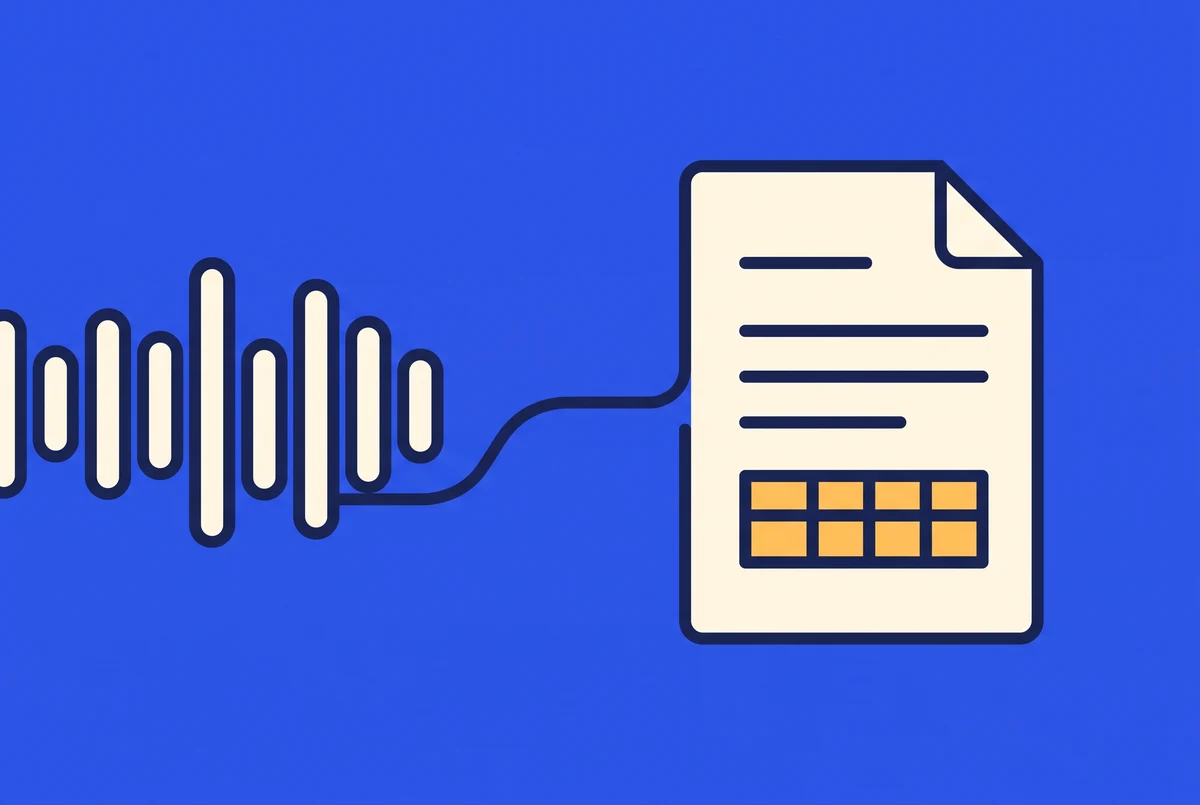
Proposals and pricing
Ever had a client sound keen on the call, then go quiet by the time your proposal landed a week later?
The system takes the discovery recording, pulls the right scope blocks from your own Notion, prices them off your own rate card, and writes the proposal in your language, referencing work you’ve actually delivered. Someone senior reads it and sends it. Three hours becomes twenty minutes, and it goes out the same day, while they still want it.
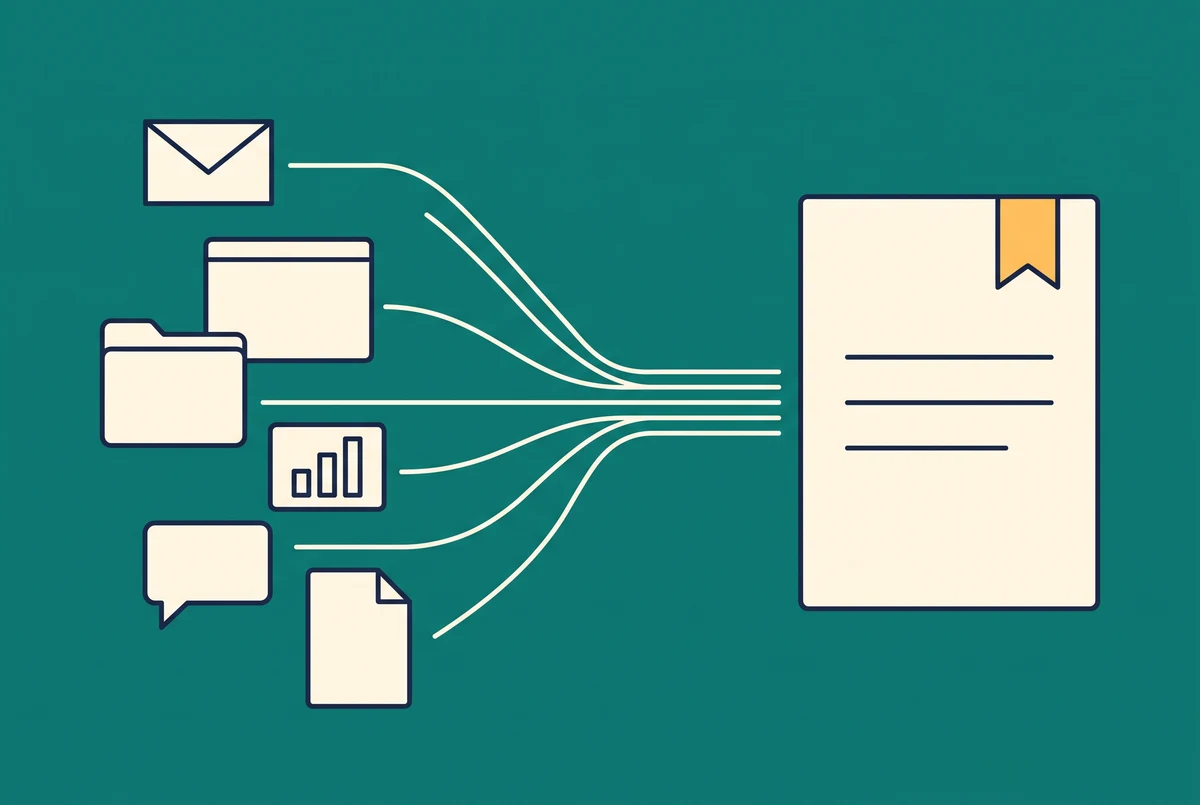
Pre-call briefs
Ever spent an hour preparing for a call and still not known which part of your offer they actually care about?
Before you walk in, the system reads everything you hold on a company: the past emails, the website, who else you’ve worked with in that space and what they’ve already told you. It puts one page in front of whoever is taking the meeting. Forty minutes of digging becomes four.

Documentation that writes itself
Ever waited a week for a senior person to sit down with a new joiner, because almost nothing was written down?
Your team keeps working exactly as they do now. Calls, files, decisions and project history land in one place on their own, and the work goes out from there, and the pages that explain how you work stay current without anyone maintaining them. When someone leaves, what they knew stays.
The part that worries you
Agencies are more careful about this than most, and they’re right to be. Here’s how we handle it.
Your clients’ data stays out of it
We work with your operational data, in your own accounts: your rate card, your past proposals and your internal files. We never touch your clients’ data unless you specifically ask us to and they’ve agreed.
Nothing reaches a client unread
Every automation ships with checks built in, and a person signs off before anything leaves the building. The system drafts. Your people decide.
It sounds like you, not like a chatbot
It’s trained on your own proposals, your own tone and your own way of scoping. That’s the entire point of the first week. Generic output is what happens when the AI knows nothing about you.
Your team doesn’t have to change how they work
There’s no new platform and no new process to enforce. It sits underneath the tools they already have open. If they hated the last thing you rolled out, they won’t notice this one until it saves them an afternoon.
An illustrative engagement
Composite example of how the four weeks play out. Not a real client.
Ellie Kerr was writing proposals on Sundays.Read the full story
Halyard Studio, Bristol. Eleven people. Brand and website work for companies with something complicated to say.
Ellie Kerr was writing proposals on Sundays.
Not because she wanted to. Because every proposal ran through her, each one took most of a morning, and mornings belonged to clients. So new business slid to the weekend, and the pipeline moved at the speed of one tired founder.
She’d already bought AI. Three tools, eleven seats, about £400 a month. The team tried them for a fortnight and drifted back to the old way, because none of it knew anything about Halyard. Generic output from a generic model, useless for a studio whose entire value is that it doesn’t sound generic.
The number that mattered
Twelve proposals a month. Three hours each. Thirty-six hours of director time, roughly £4,300 a month at what Halyard bills.
And the slower cost, the one Ellie felt more: proposals went out four days after the call. By then the prospect had two others in the inbox.
Week 1. Foundations, then the first build
Two hours with the team, mapping where the week actually goes. Proposals were the loud problem. The audit found a quiet one underneath: nobody prepped properly for new business calls, because prepping meant forty minutes of digging through Drive and Notion, and nobody had forty minutes.
Then the part almost everyone skips.
Halyard had a Notion database of scope blocks built up over four years, DISC-01 for short-form discovery, BRAND-03 for brand consolidation, and about forty more. They had a Drive of finished work. They had a rate card. They had call recordings. All of it real, none of it reachable by anything.
We connected it. That’s the difference between AI that impresses in a demo and AI that survives a Tuesday. Without it you have a clever stranger. With it you have someone who’s worked at Halyard for four years and has read every proposal the studio has ever sent.
By Friday the first system was running on live work: a pre-call brief that reads everything Halyard holds on a prospect and puts one page in front of whoever is walking into the meeting.
Forty minutes of digging became four.
Week 2. The proposal
Tom Reddick, their ops lead, drove this one. We sat next to him.
The system takes the discovery recording, pulls the right scope blocks from their own Notion, prices them off their own rate card, and drafts the proposal in Halyard’s language, referencing work Halyard has actually delivered. Tom reads it, fixes what a human should fix, sends it.
Three hours became twenty minutes.
The four-day lag became same day. Ellie’s view is that this mattered more than the hours. They started arriving first, while the call was still warm.
We also did the least technical and most important thing in the four weeks. We named an owner. Tom. Not a committee, not “the team”. One person whose job it is to keep the systems alive. Every engagement that quietly dies six months later dies because nobody did this.
Week 3. Halyard builds one
Nadia Sharpe, one of their designers, built the third system herself: a case study drafter that pulls from a finished project’s own files and writes the first version.
We supervised and kept our hands off the keyboard. That was the point of the week.
Then ninety minutes of training for the whole studio, on the two things that actually transfer: how to spot which work is worth automating, and how to build it.
Week 4. Handover
Nadia and Tom demonstrated all three systems back to Ellie. Her team presented it, not us.
Runbooks handed over. Before and after numbers on the table. A written list of what to build next, in their order of pain.
Then we left.
The two months after
This is the part that decides whether four weeks was worth it.
Halyard built four more systems without us. A weekly client update drafter. A scope-change checker that flags when a request has quietly drifted outside what was signed, which paid for itself the first time it caught one. Two smaller internal ones.
Then they hit a wall. Routing incoming briefs across their project system, with conditional logic and a real approval step. Tom spent two weeks on it. It kept breaking.
He wasn’t doing it wrong. It was an engineering problem, not a training gap, and it sat above the tier anyone learns in four weeks.
So they called. Two-hour consultation, fixed fee to build it, handed back with a runbook. Theirs.
They own the ordinary ones, and there are far more ordinary ones than hard ones. We get called for the hard ones. Nobody is renting anything from us.
Where they are now
Eight systems running, seven of them built by Halyard.
Tom owns them and hasn’t asked us a question in six weeks.
Ellie hasn’t written a proposal from scratch since February. She has her Sundays back, and Halyard answers new business the same day.
We also work with
Claim your 30-minute free strategy session
Tell us a little about your business. You get your AI plan within 48 hours, and it’s yours whether or not we ever work together.